

teamshaper’s management pathway
TLDR
A twelve-month management pathway for public sector leaders, built around eight modules delivered by subject-matter experts, with the same lead trainer running kickoff, office hours and the closing session throughout the year. Modules cover self-awareness, ways of working, managing performance, decision-making, value for money, managing through change, continuous improvement and wellbeing, adapted to each organisation's own context and codes of conduct.

a year-long programme for public sector managers
Across our work designing and delivering management development for purpose-driven public sector organisations over the years, we've built a clear view of what the job actually demands. Public sector managers hold standards and deliver services often with fewer resources than they need, motivate teams with few incentive levers, and are expected to find better ways of working while living through near-constant restructuring.
This is the management pathway we believe works best for that reality: it gives managers the tools to hold the conversations that make the biggest difference, the confidence to make decisions that hold up to scrutiny, and room to find better ways to deliver, beyond simply managing what they've inherited.
objectives
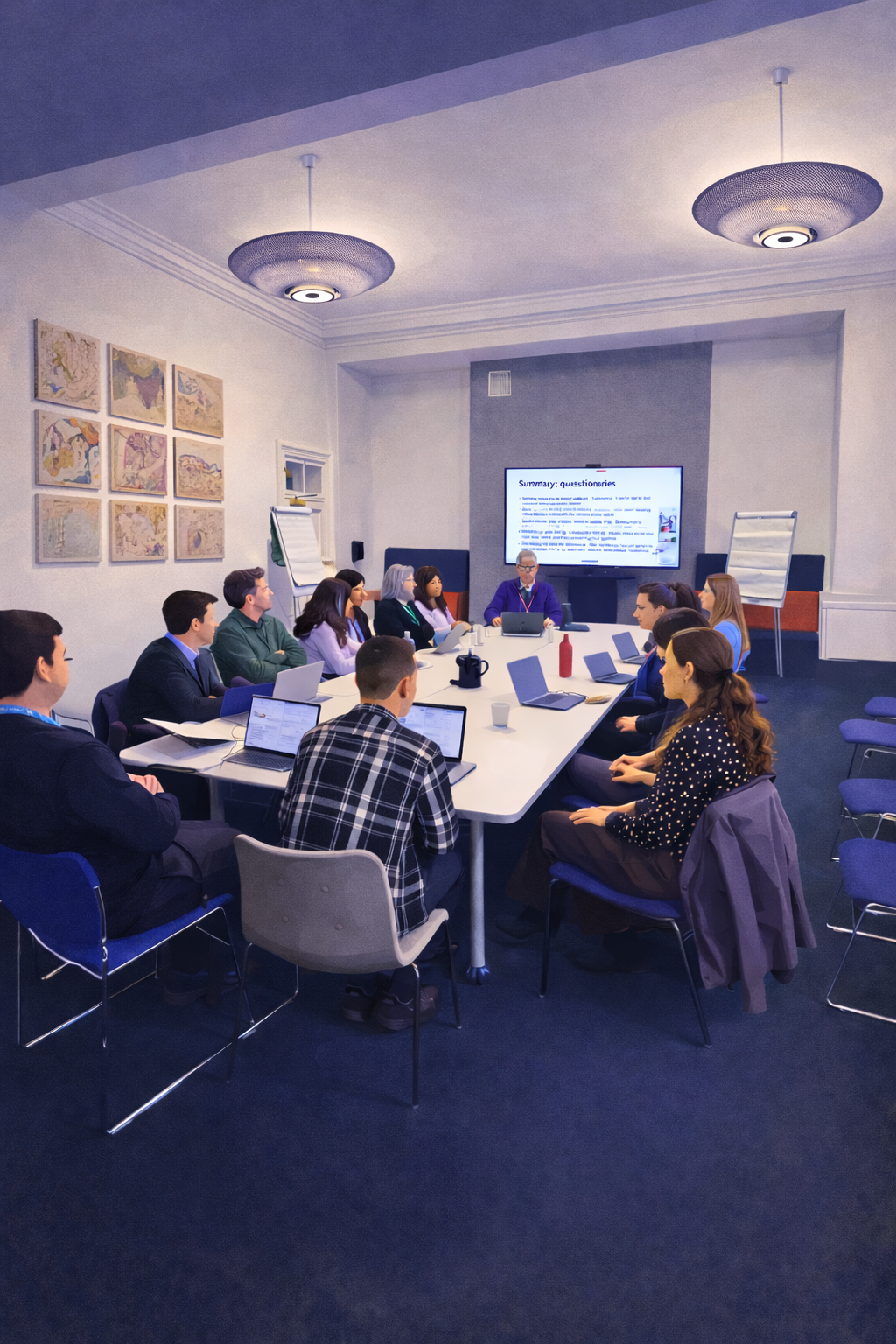
by the end of the programme, participants will be able to:
Turn the organisation's values and standards into how their team behaves, day to day
Motivate and develop the people they manage
Give feedback and handle conflict directly, including through the sensitivities of formal process
Find better ways to deliver a service, and challenge how things have always been done
Make sound, evidenced decisions that can be defended under scrutiny
Make the case for spend, and demonstrate value for money
Keep a team stable and delivery on track during periods of change and ambiguity they don't control
at a glance
12
months programme
8
modules
20
maximum cohort size
10
monthly ‘office hours’ sessions
1
lead trainer
1
programme coordinator
the modules
-
Self-Awareness & Personal Impact
A diagnostic and individual support to understand your working style, and present yourself effectively as a manager.
-
Ways of Working, Prioritisation and Delivery
Managing a full workload, delegating effectively, and keeping day-to-day operations running smoothly.
-
Managing Performance & Developing People
Managing performance day to day, from feedback and difficult conversations to coaching people to grow.
-
Decision-Making & Judgement
Sound, timely decisions in operational situations, made in a way you can evidence and explain afterwards.
-
Value for Money & Commercial Thinking
Making the case for spend, considering costs and demonstrating value for money with public funds. -
Managing Through Change
Keeping a team informed, steady and delivering when change is imposed from outside their control.
-
Continuous Improvement & Innovation
Actively seeking improvements in how a service works and questioning processes and ways of working -
Wellbeing & Resilience
Protecting your own capacity first, and recognising and supporting strain in your team.
our approach
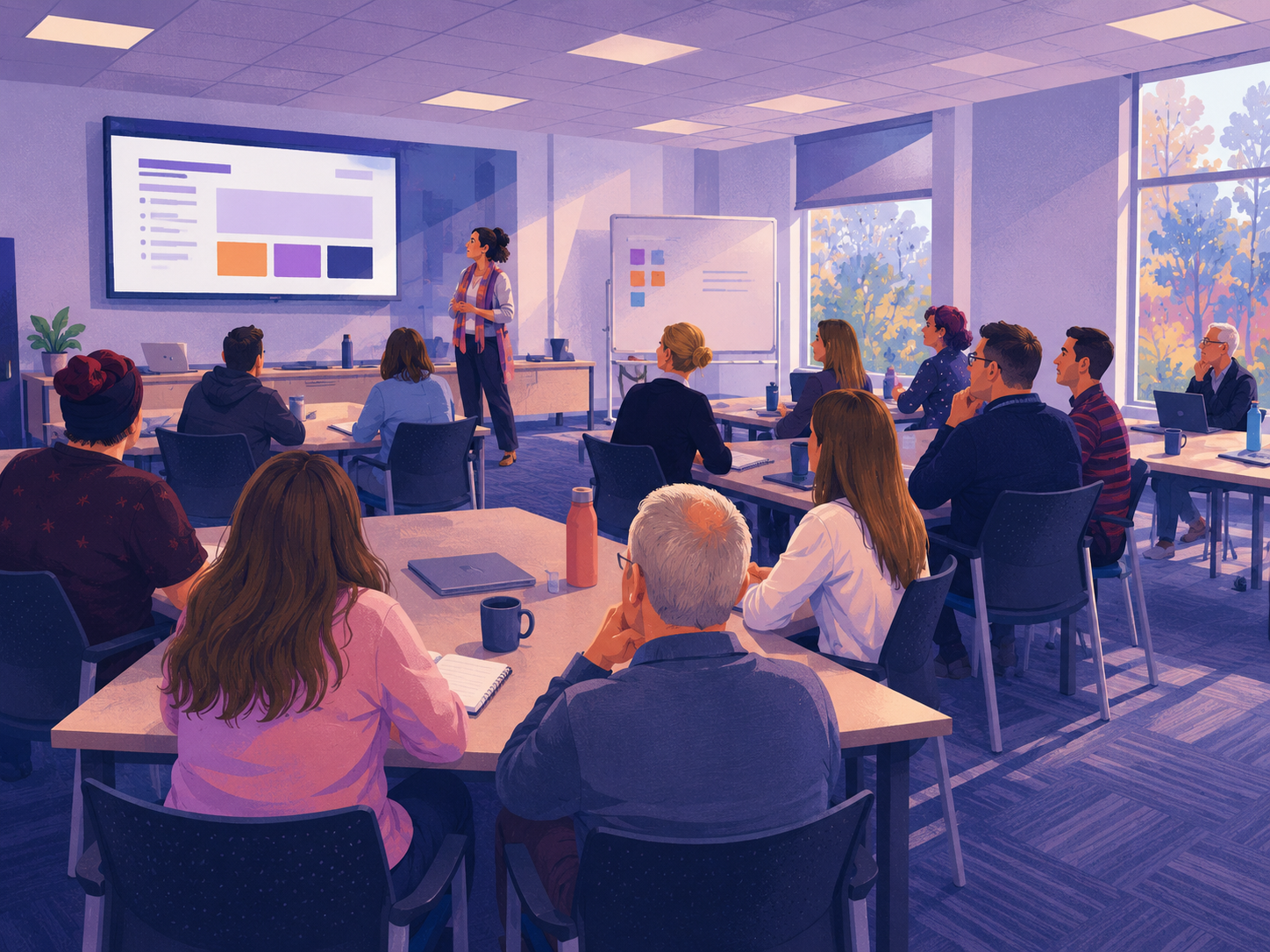
Management behaviour changes through repetition, real decisions and sustained practice. Each module uses the participant's own team and organisational context: their people, their processes, their live situations, so there is nothing left for them to translate once a session ends. In the room, this means a half-day or full-day session built around live, facilitated practice: case studies, role play and scenario exercises, tested with peers and followed by direct feedback in the moment, in a psychologically safe environment where managers can be open about what they find difficult.
The continuity of the programme, with regular checkpoints between modules to ask questions and get feedback, is what turns individual sessions into a complete, interconnected set of behaviours across the full year. Each module is delivered by a subject-matter expert in that topic, while the same lead trainer runs the kickoff, the office hours and the closing session throughout the year, giving the cohort a consistent thread across every module and every expert who delivers it. Each module leaves participants with a short reference guide or tool to return to on the job, and commitments are tracked from one module to the next, so the continuity holds outside the room as well as in it.
timeline
bespoke by design
-
content
Modules are built around the client's own values, standards and ways of working. -
cohort size
Each cohort runs up to 20 participants, and we run as many concurrently as needed. -
programme plan
Eight modules, each half a day or a full day, over twelve months is the default; we combine or drop modules for shorter commissions. -
delivery format
Face-to-face is the default, with virtual and blended options also available. -
diagnostics
A workplace-contribution diagnostic is our default; we can add 360-degree feedback, psychometric profiling, or any other tool the client already uses. -
individual coaching
Available alongside the programme for managers working through a specific theme, decision or challenge in private.
impact
how we measure success
We agree the specific success measures with each client before the programme begins, since what "good" looks like depends on the organisation's own management standards. As a baseline approach, we run a confidential survey before the programme starts to capture each manager's starting point and development priorities, track progress against agreed measures throughout, and can incorporate 360-degree feedback as part of the diagnostic where a client wants that added dimension.
At the end of the programme, we deliver an Impact and Value Report covering reaction, learning, behaviour and results: pre- and post-programme comparisons, self- and manager-assessment against the client's own standards, attendance and completion data, and facilitator observations drawn from across the year. Quantitative measures are reinforced with individual examples of behaviour change gathered through closing sessions, so the evidence has context as well as numbers.
outcomes
For the individual manager, the programme builds a clearer personal leadership message, a working set of decision-making and governance tools, and demonstrated growth in strategic thinking, influence and culture-shaping across the organisation.
For the organisation, it builds a cohort of managers working to a shared set of standards and values, able to lead beyond their own function, with behavioural change that is baselined, tracked and evidenced through the year.