
Case Study
Social Media Audit, Compliant Playbook and Workshop for a police force, Mar-Jul 2026
An audit, a workshop and a compliant Playbook helped a corporate communications team lay the foundations for building a more confident, consistent approach to social media.
Clarity on how social media is expected to work rose by 32%, perceived team effectiveness by 14%, and confidence in handling it going forward by 12%.
An audit to benchmark performance, a Playbook that turns the APP into a working document, and a workshop to build the confidence to use it creatively
Client: a police force in England (confidential)
This force’s corporate communications team plays a vital role in how the force communicates with the communities it serves. A new College of Policing Media and Communications Authorised Professional Practice (APP) introduced a requirement for forces to hold a documented social media playbook. The team leader used the moment to go well beyond the compliance requirement itself, bringing the whole team’s own experience and ideas into shaping how they’d work going forward, and building people’s confidence to be more creative within it.
The programme was led by Teamshaper’s Associate Trainer Louise Bartlett, our social media strategy specialist, with experience in user-centred digital service design in the public sector.
Built upon the team’s context
The programme opened with a full audit of the team’s social media activity across all channels in the prior 15 months, establishing a clear benchmark of how it was performing, alongside a confidential staff questionnaire, stakeholder consultations and external benchmarking against other police forces.
The picture that emerged was a strong one. The team had built an established, engaged audience, and the best-performing content across the audit period was reactive and unplanned, a clear sign that the team’s own instincts for what resonates with the public were already sound. The audit also confirmed what tends to work best in this space more broadly: more short-form video, more human-centred content built around real people and real community activity, a more deliberate approach to joining trending conversations while they’re still live, and using each platform for what it’s genuinely good at.
The staff questionnaire showed a team that cared deeply about the work and wanted to do more of it: social media was valued as a direct way to build public trust, and there was a strong appetite across roles and levels to learn and share good practice. The clearest opportunity the team identified for itself was to make the criteria for getting content approved clearer, so people felt able to invest time in new ideas with confidence they’d be well received. This, alongside a shared wish for a more distinctive tone of voice, gave the workshop its focus.
The APP requires forces to hold a documented social media playbook, and Teamshaper helped the team build one: laying the foundations first, then guiding the team through documenting their own operational reality within it, and using the process as a chance to work through some bottlenecks and tweak ways of working.
The working day
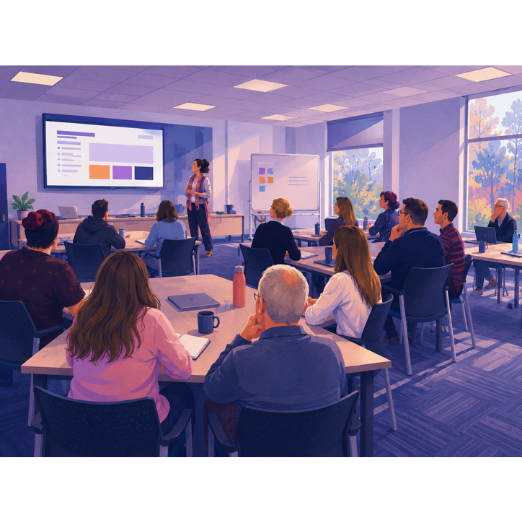
The workshop brought the team together in person for a full day built around a single connecting idea: in small groups, participants drew a real content type at the start of the day and built one piece of content around it end to end, applying each new framework as it was introduced and presenting back what they’d built and learned along the way.
The day did four things:
It showed the team, clearly and objectively, how their social media was performing.
It showed them exactly how much room they had to be flexible and creative while staying within the rules, giving them a clearer sense of where the real edges were.
It gave them practical tools and techniques to lift the standard of what they produce, from a simple story-first structure for writing captions people read, to building content that’s accessible by design, thinking about alt text, captions and plain language from the start of the process.
And it spent real time on confidence, on the basis that people rarely take creative risks with something they don’t yet feel sure of, including a candid discussion on posting and engaging, and a look at the evidence that most of what the team posts is already well received, with the real skill being in handling the harder moments well when they come up.
Each participant closed the day with a personal commitment to take into the following 30 days.
“It was enjoyable, engaging and really insightful.”
“I really enjoyed this and am very impressed with the level of creativity from other teams!”
“[We] started considering how we can better use social media as a tool to engage with the public but also, crucially, set expectations for the department in areas which were previously unclear.”
From clarity to action
The workshop marked the start of the Playbook’s next stage. In the weeks that followed, individual team members took ownership of specific sections, shaping each one to reflect how they wanted to work going forward, with the team leader guiding and signing off the result. By the time of the follow-up session a month later, the team had a documented, APP-compliant social media Playbook that was genuinely theirs, structured and advised by Teamshaper, and finished by the people who’d use it every day. It gave the team:
confidence that their social media practice is compliant
a shared, documented way of working that the whole team had a hand in shaping
practical tools and frameworks for producing strong content and handling public comments with confidence
a simple way of tracking what’s working, so the team can keep improving
Response from the team
The large majority of respondents to the end-of-programme survey said the programme had successfully laid the foundation set out at the start of the workshop, or made good progress towards it, for an overall impact score of 4.2 out of 5.
“I really enjoyed this. It’s so useful to get the perspective of someone outside of policing, thank you so much.”
“I’d say it was extremely engaging, beautifully targeted, and devastatingly useful”
“[The programme has] created a strong basis for social media going forward.”
“A structured and helpful way forward. We have clarity and consistency for all.”
“[We] made some very positive steps to moving forward with how we approach social media.”
Sustaining momentum
A follow-up session took place a month later, bringing the team together virtually to review progress against the personal commitments made at the workshop, mostly around trying out new tools and approaches, and to give the team constructive feedback on real posts made since the workshop.
That check-in showed staff had tried things for the first time in a way that reflected the breadth of the team itself. One team member made and published her first reel. Another, whose role rarely touches social media at all, took the time to properly understand the team’s channels for the first time. Others explored the compliant AI tools introduced during the workshop, looked at animation as a new way to tell a story, compared what worked well on other local pages, and planned content for community moments like Pride using the frameworks from the day. Staff were also proposing new creative directions of their own accord, from cross-posting across platforms to building a shared library of content snippets, short sessions led by the team’s own subject matter experts, and an existing partnership with local students already giving the team a fresh, outside perspective on their content.
The session also marked the introduction of the finished Playbook, ready for the team to run with. Since the programme ended, the Playbook has become a living document - already updated several times in response to new College of Policing guidance, and now built into the team's annual performance review process.
What this demonstrates
This case shows what happens when a comms lead treats a new compliance requirement as a genuine opportunity to open things up. By listening to the team directly, we were able to facilitate the shaping of a Playbook and a working day around exactly what would help people feel more able to experiment, building on a team that was already producing strong results and had a clear appetite to do even more. The team leader knew what behaviours they’d like their team to adopt, and they used the programme to build practical structures that will enable their team to do so.
By the end of the programme, clarity on how social media is expected to work across teams had risen by 32%, the sharpest of the three indicators measured, because clarity was the programme's central focus: documenting the team's own processes and giving people a direct hand in writing them. Perceived effectiveness rose by 14% and confidence in the team’s ability to deliver rose by 12%, smaller by comparison because they follow behind clarity: effectiveness improves once people know what to do, and confidence follows once they start seeing that effectiveness play out in their results. The combination of an evidence-led audit, a working day built around real content and a Playbook the team finished themselves gives the force a practical, sustainable foundation for how it manages social media, with room for that effectiveness and confidence to keep building as those results continue to show.
Find out what this programme would look like when adapted to your team’s context
“The workshop has put some significant structure into our future social media offering and also broadened the knowledge of the whole department in the role all teams have to play.”