
ai adoption / scanning the technology horizon
Training for public sector leaders on horizon scanning for technology change
A full-day workshop for leaders who aren’t technology specialists and don’t need to be. You learn where to look, how to read the direction technology is moving in, which decisions belong to your specialists and which are yours, and how to put a safe, compliant case to the people who decide.
Technology now moves too fast, and sits too close to how services are designed and delivered, to be left to the technology team alone. A decision about a new tool is also a decision about your workforce, your service users, your risk exposure and how you account for public money. Those are leadership decisions, and they are made better by leaders who understand enough to ask the right questions.
This programme takes the fear out of that. The focus is direction of travel, not technical detail. You build a scanning routine your group owns, judge which developments are worth backing now and which can wait, and weigh each one against the realities of public sector work: compliance, a cautious risk appetite, a workforce with mixed digital confidence, and accountability to the taxpayer for every pound spent.
Every idea leaves the day with a safe route to test it, a clear view of who to involve and a one-page case ready for decision makers. The programme is adapted to the work most relevant to your group and delivered in line with your organisation’s values, code of ethics and tone guide. No technical background is needed.

-
By the end of the programme, participants will be able to:
Scan ahead for emerging technology and new ways of working relevant to their service, knowing what to look at, where and how.
Tell the difference between decisions for technical specialists and decisions that belong to leaders.
Ask the right questions of technical colleagues and suppliers without needing technical expertise.
Judge what is worth backing early and what can wait for maturity, weighing risk, compliance burden, workforce impact and value for money.
Build the case for early adoption, with a safe test, and put it to decision makers.
-
Leaders who approach technology decisions with confidence, not anxiety.
Clear lines between what specialists decide and what leaders own.
A common approach across your group, so ideas are judged on shared criteria.
Ideas that reach decision makers with their compliance route, safe test and workforce impact already worked through.
A scanning routine your group keeps up after the day.
-
Discovery: a conversation with you and a short pre-workshop questionnaire. It covers how your group scans today, where it feels least confident, the rules and approvals that apply to trying something new, and the services it is responsible for. The results shape the examples and the compliance checklist used on the day.
Full-day core workshop: in person or virtual. Every session is built around practice, discussion and decisions your group will face.
-
09:30 – 09:45 | Welcome and expectations
Introductions and aims for the day. Participants share what they want to be able to judge and back by the end of the session, and the group reviews the pre-workshop results.09:45 – 10:15 | Whose decision is it?
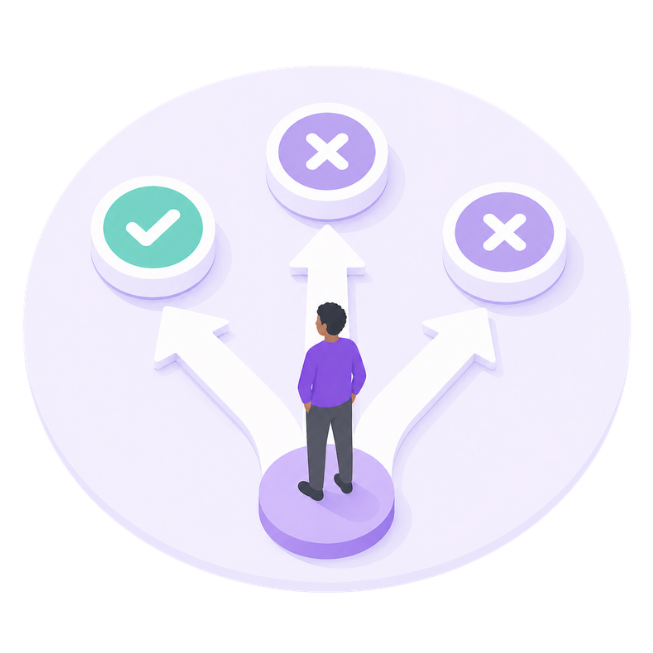
Groups work through a set of technology decisions and decide which are specialist calls, which are leadership calls and which need both. They name the worries that hold leaders back from technology conversations, and agree what a leader needs to know and what they can leave to others.10:15 – 10:45 | Start with the work, before the technology
Groups choose a service or way of working they are responsible for. They trace it from the point of view of the people who use or depend on it, and mark where friction, delay or cost sits today. This gives the scan a clear focus.10:45 – 11:00 | Break
11:00 – 12:00 | Scanning for signals: what to look at, where and how
Participants learn five kinds of signal: central direction and guidance, peers’ pilots and published lessons, supplier and market developments, research and evidence, and what colleagues and service users report. Groups build a scanning map of where each comes from in their area and which specialists to ask, such as digital and data, security, data protection and commercial colleagues. They sort signals by when each is likely to affect the work: now, next or later. Groups agree the rhythm for their own scan.12:00 – 12:45 | From signals to options
For their strongest signals, groups set out what each could change in their service, who it would affect and what would need to be true for it to work. They test each option against three routes: new technology, a change to process, or no change at all.12:45 – 13:30 | Lunch
13:30 – 14:10 | Back it now, trial it or watch
Groups agree their own criteria for value and maturity, such as evidence of use elsewhere, available guidance and standards, the consequence of getting it wrong and the skills needed. They sort their options into back now, trial safely or watch, and defend their choices to a challenge panel in a short role play.14:10 – 14:55 | The public sector test
Groups work through the considerations that shape technology decisions in public service: data protection, security, accessibility, procurement and governance approvals; the organisation’s appetite for risk; the impact on a workforce with mixed confidence and skills; public trust; and value for money for the taxpayer. They rate the burden of each, note which specialist to involve, and define a safe test: what can be tested, with what data, who signs off and when it stops. They revise their choices in light of the findings.14:55 – 15:10 | Break
15:10 – 16:00 | Building the case for early adoption
Each group writes a one-page case for an idea worth pursuing, addressed to a named decision maker. It sets out the opportunity, the evidence, the compliance route, the workforce impact and a small, safe test with its scope, success measures and the point at which to continue or stop. Peers challenge each case the way a decision maker would. Groups refine their case and rehearse a two-minute pitch to the challenge panel.16:00 – 16:30 | Commitments and close
Each participant commits to one change in how they scan and sponsor technology. The group agrees its scanning routine, covering who scans, which sources and how often it reviews signals together, then closes with questions.